
The Aarchaa Story
Long before there were boardrooms, there was Kalari.
In the ballads of old Malabar, one name was spoken with a particular kind of reverence: Unniyarcha. A warrior trained in kalaripayattu, feared by her enemies and unmatched with an urumi in her hand. But her real battle was never just the one in front of her — it was the one for a world where women stood as equals, unquestioned.
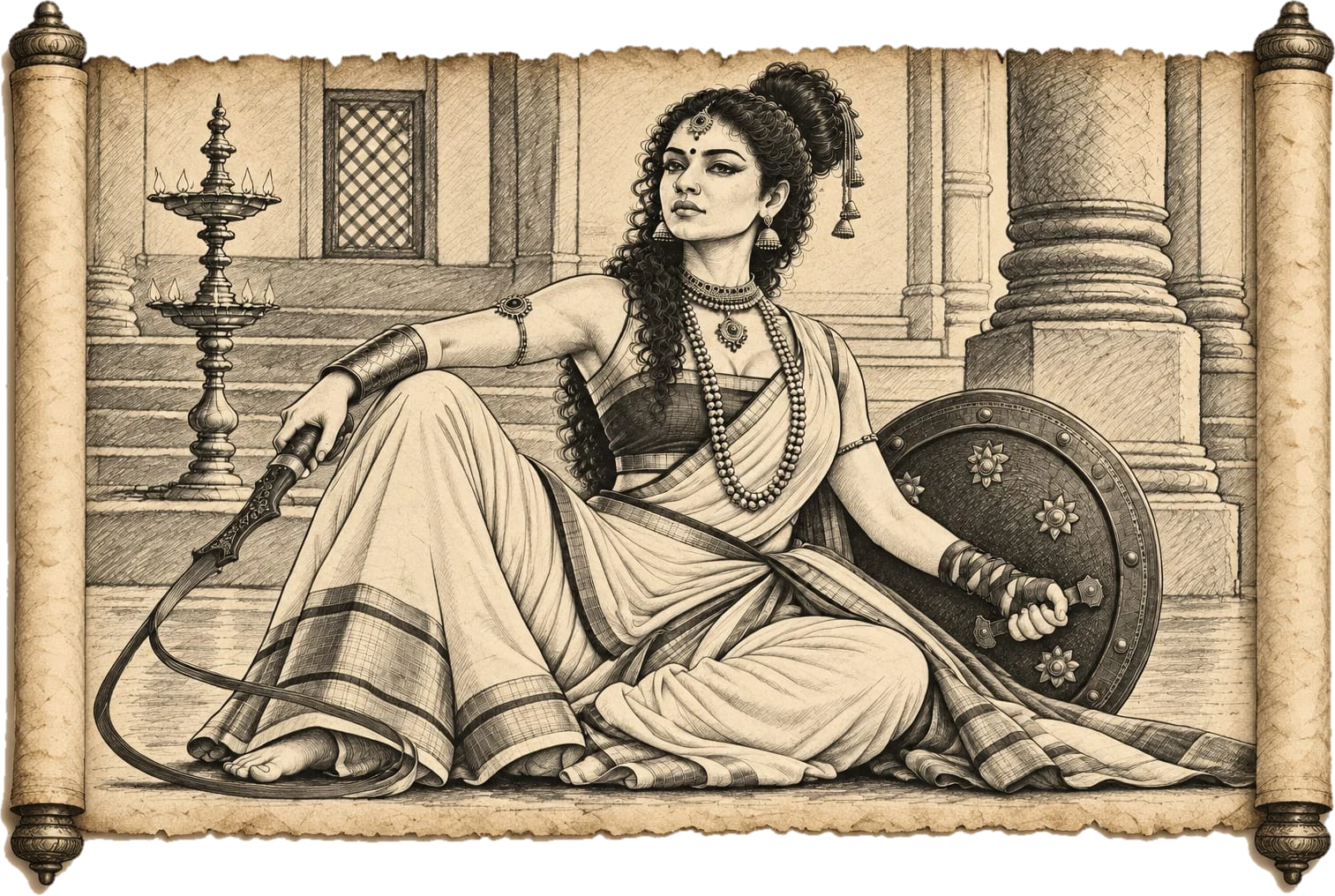
Her stories outlived her sword. They were carried through generations, told and retold, because some tales refuse to be forgotten.
We think about her often.
Because the battles haven’t ended, they’ve just changed shape. Today, they’re fought in boardrooms instead of battlefields, in the quiet negotiations of everyday life instead of open combat. The urumi is gone. The kavajam too. But the fight for space, for respect, for being taken seriously continues, one ordinary day at a time.
So if the armour has changed, what does today’s armour look like?
We think it looks like how a woman carries herself. What she chooses to wear when she walks into a room she intends to own.
That’s where Aarchaa begins.
Handwoven in Kerala
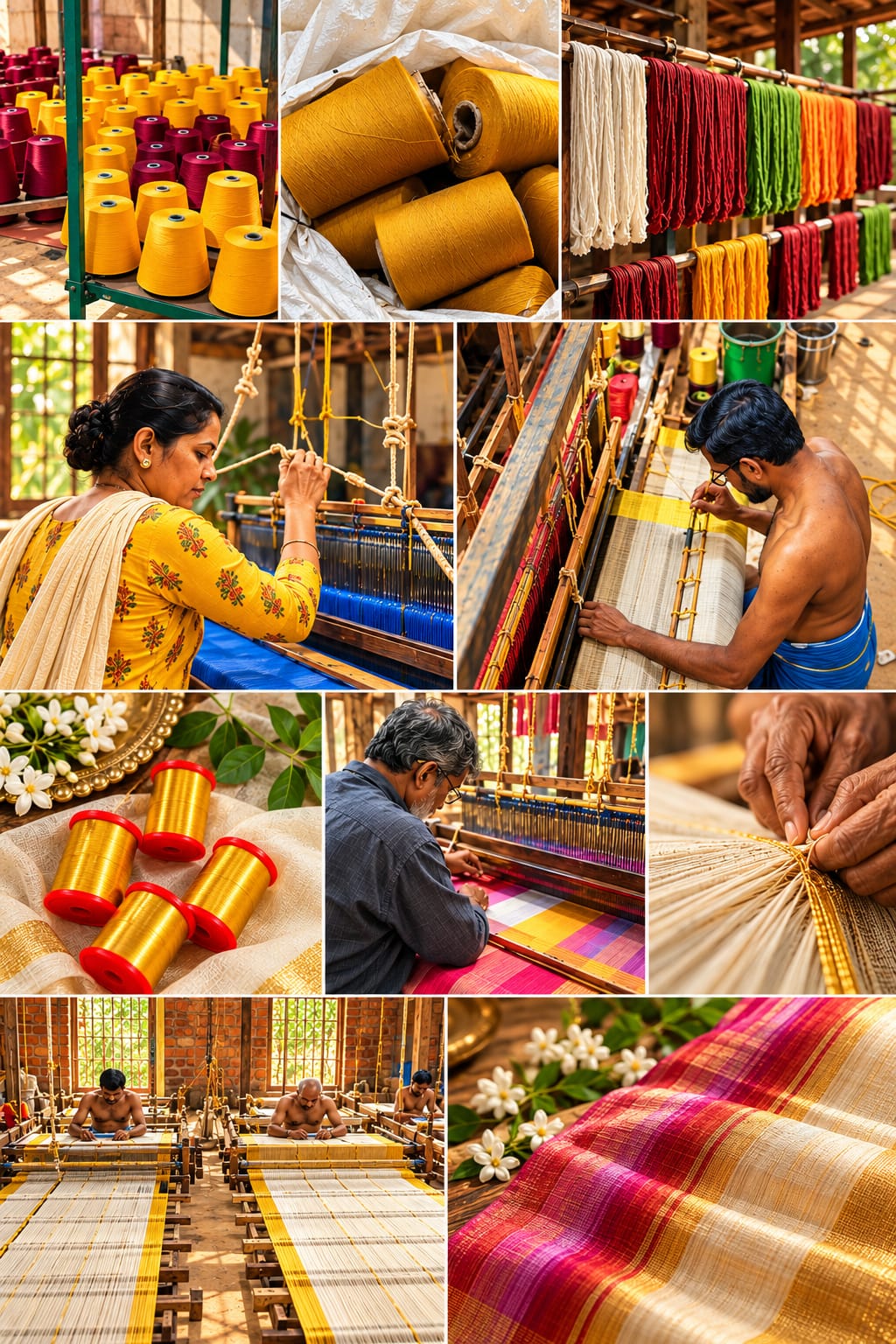
Every Aarchaa sari is handwoven, carrying the handloom mark as proof of its making. We work directly with weavers’ societies across Kerala — Kasargod, Kannur, Balaramapuram — so what reaches you is never an imitation, only the real thing. Behind every border and every fold is a weaver’s hand, a cooperative’s livelihood, a tradition that refuses to disappear quietly.
To wear handloom today is its own quiet act of defiance, a vote for authenticity over mass production, for slowness in a world built for speed.
Timeless craft.Indelible beauty.Quiet strength.
Aarchaa — what’s your armour today?